

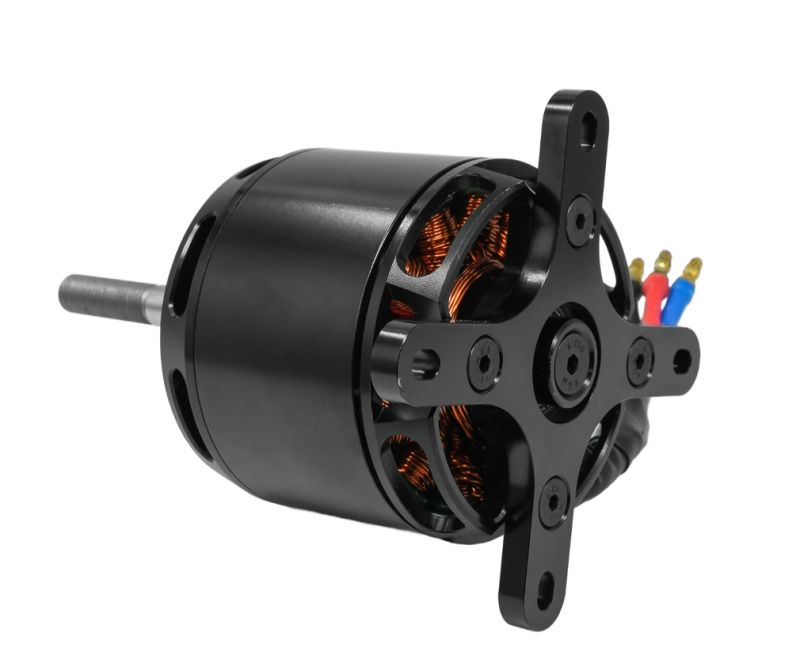
Service-First Approach to Drone Power Motor Needs
Kpower Technology Co. expands more than component supply by taking a service comparison mindset: helping teams choose the right propulsion and control parts based on how the system must behave in flight. For drone power motors and FPV racing drone motors, performance expectations often differ—racing setups typically prioritize rapid throttle response and consistent output during high-intensity runs, while broader UAV power motors may Kpower Technology Co. Expands UAV Motor and Servo Solutions for Drone Power Motors and FPV Racing Drone Motors emphasize efficiency, integration simplicity, and stable delivery across mission profiles. Kpower pairs engineering guidance with a structured product ecosystem so customers can align motor characteristics, mounting constraints, and control requirements without “trial-and-error” rework. This service model is designed to connect R&D decisions to manufacturing realities, from early prototype verification to production readiness.
Comparing Motor Options: Thrust Response vs. Integration Efficiency
When comparing motor solutions, the main difference is how each propulsion type supports the vehicle’s power-to-weight and dynamic response goals. Kpower’s brushless motor capabilities are built around electromagnetic design and precision mechanical manufacturing, supporting scenarios that demand instantaneous acceleration and controlled power delivery. For FPV racing drone motors, where the pilot expects predictable behavior during aggressive maneuvers, this focus helps optimize thrust response and reduces integration friction when designers must fit compact frames. For general UAV motor needs, Kpower supports multiple KV values, voltage specifications, and dimensional sizes, enabling teams to match drive performance to airframe form factors and energy strategies. Engineers can compare options not only by raw specs, but by how Kpower’s manufacturing approach reduces variability between prototypes and production builds.
Servo and Control Differentiation for Precision Motion Tasks
Beyond propulsion, service comparison extends to motion control. Kpower’s expanded servo lineup supports auxiliary precision requirements across intelligent aerial subsystems, such as stabilization modules, gimbal positioning, payload actuation, and steering adjustment structures. The differentiation comes from selecting the right torque characteristics, accuracy profile, and durability level for the mechanism. Kpower offers brushless servos, coreless servos, digital servos, micro servos, waterproof servos, and high-torque industrial servos, giving teams a clearer route to matching torque, size, and control method. Compatibility is supported through PWM, UART-TTL, RS-485, and CAN-bus control pathways, which helps procurement teams compare integration effort across different flight controllers and payload systems. For customers, this reduces the gap between “bench performance” and a stable, repeatable production configuration.
Conclusion
Kpower Technology Co. strengthens UAV development by treating service as part of the product comparison—guiding selection, tuning, and production transition for motor and servo ecosystems used in drone power motor systems and FPV-style powertrains. By combining modular drive technology, customized engineering support, and full-cycle manufacturing discipline, kpower.com helps teams evaluate propulsion and precision control choices with fewer integration surprises and more consistent outcomes from prototype to production. For organizations seeking dependable motor and servo solutions for high-speed aerial designs or scenario-adaptive UAV upgrades, this service-aligned approach supports faster decision-making and more repeatable results.