

Why Local Drone Builders Are Turning to Expanded UAV Drive Options
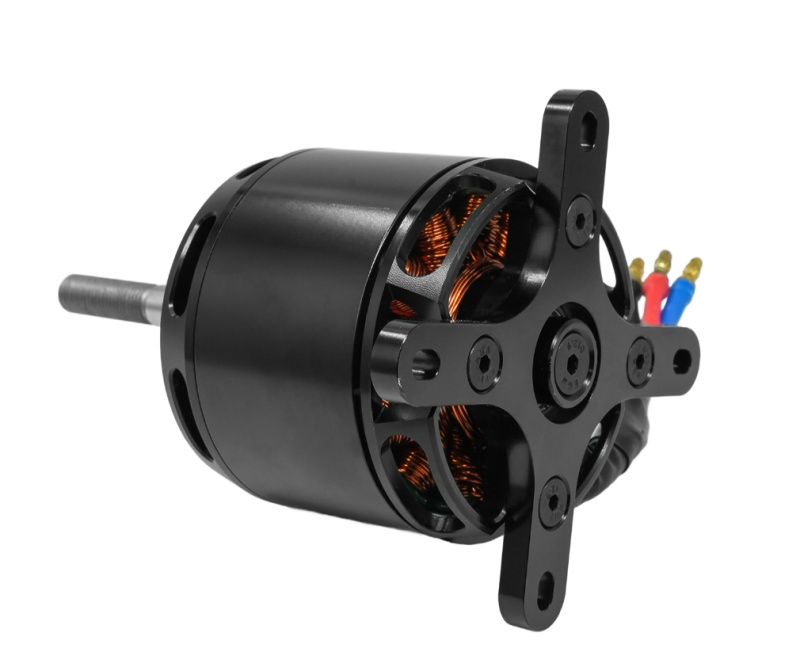
In UAV and FPV circles, performance is often decided long before a drone ever takes flight. Local makers and integrators typically need components that match their frame geometry, power budget, and tuning preferences—without adding long lead times or complicated sourcing. Kpower Technology Co. strengthens that ecosystem by expanding its professional UAV motor and servo solution lineup, focused on Kpower Technology Co. Expands UAV Motor and Servo Solutions for Drone Power Motors and FPV Racing Drone Motors drone power motors and FPV racing drone motors as well as integrated aerial drive systems for unmanned applications. With a manufacturing base in Dongguan, the company is positioned to support engineers who want reliable propulsion output, compact packaging, and predictable control behavior when iterating prototypes or preparing production builds.
Motor and Servo Building Blocks for Competitive FPV and Practical Drone Motors
Fast response and stable thrust characteristics matter when every throttle change affects race performance. Kpower applies electromagnetic motor design, precision mechanical manufacturing, and customized drive system tuning to help address thrust-to-weight needs, dynamic response speed, and integration constraints common in high-speed aerial platforms. The expanded motor portfolio also targets flexibility for engineers—offering multiple KV values, voltage specifications, and dimensional sizes—so teams can match a motor to their vehicle form factors and mission profiles. Alongside propulsion, the company broadens servo support for precise auxiliary control functions, including stabilization and steering mechanisms. The servo lineup spans brushless, coreless, digital, micro, waterproof, and high-torque industrial options, enabling selection based on accuracy, durability, and installation constraints.
Flexible Control Interfaces and Precision Motion for Real-World Integrations
Beyond selecting the right motor class, drone teams often face the challenge of aligning control interfaces with existing electronics. To simplify system integration, Kpower supports multi-protocol servo control, including PWM, UART-TTL, RS-485, and CAN-bus. This helps designers tune torque delivery and response behavior across different payloads and control subsystems. Common use cases include intelligent gimbals, high-definition camera stabilization modules, precision payload execution mechanisms, and robot aerial accessories. For teams pursuing multi-functional aerial upgrades, the expanded pairing of propulsion and control components supports a more cohesive motion-control architecture—particularly important when space is limited and reliability under sustained operation is required.
Conclusion
reflects a practical, builder-friendly approach: component compatibility, precision manufacturing, and scenario-oriented engineering support. For local manufacturers and distributors, that combination can reduce integration friction and support smoother upgrades from prototype to production. As engineers explore lightweight structures, faster dynamic response, and improved energy efficiency targets, having a dependable motion-control partner matters. Learn more about their ecosystem and engineering direction at kpower.com.