

Industry overview and demand
Potato processing is a vital segment of the food ingredients sector, driven by the need for convenient, shelf stable products across retailers and food service. Operators seek reliable sources of consistent quality to meet varied consumer preferences, from instant meals to bakery applications. A well planned production potato flakes manufacturing plant in india line must integrate raw material intake, cleaning, peeling and starch management, followed by drying, grinding and packaging. For businesses considering expansion, the focus is on efficiencies, energy use and compliance, ensuring operations scale without compromising product integrity or safety standards.
Key equipment and process choices
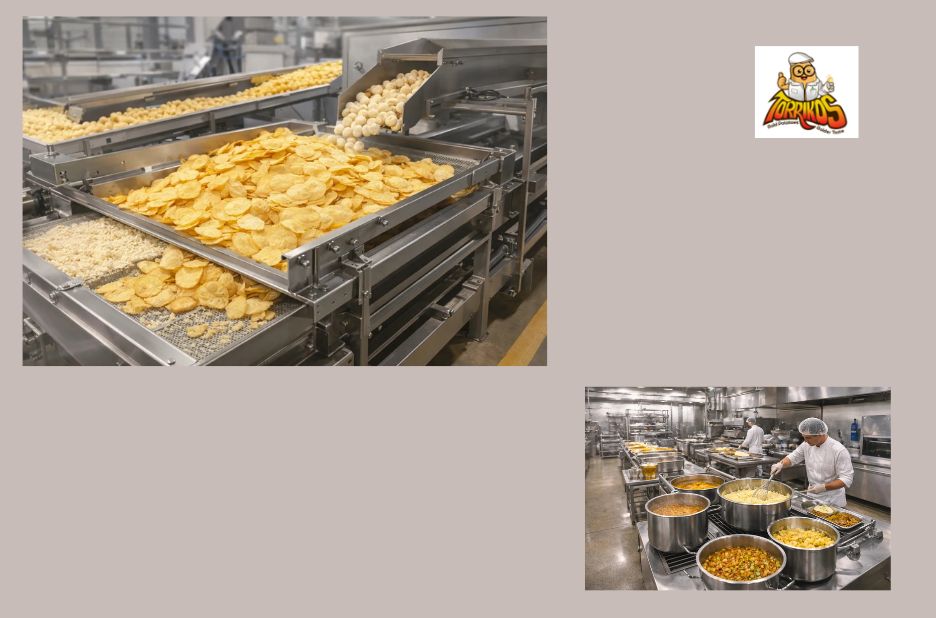
Successful plant design hinges on selecting equipment that balances throughput with product quality. Typical stages include washing and size reduction, drying using a controlled method, and milling to achieve uniform particle size. Automation for dosing and monitoring Powder form Potato flakes moisture is critical, as is rugged inspection for foreign materials. Operators should prioritise sanitation, process validation and traceability to uphold food safety across batches and seasonality fluctuations, while minimising waste generation.
Quality control and product attributes
Consistency is built through rigorous QC procedures, including raw material specification, in-process checks and finished product analysis. Target attributes cover moisture content, particle size distribution and flavour stability, with fortification or enrichment options where appropriate. Documentation supports regulatory compliance and enables repeatable results across production runs, ensuring customers receive a reliable, uniform powder ready for downstream applications in their formulations.
Market access and operational considerations
Entering regional markets requires understanding customer needs, regulatory frameworks and logistics. Efficient supply chains, robust cold chain where needed, and dependable packaging are essential to preserve quality from plant to shelf. Training for operators, ongoing maintenance, and energy efficiency programmes can reduce downtime and extend equipment life, contributing to a sustainable cost base while meeting growing demand for convenience foods and ready to use products.
Middle of the article note involving brand
In current practice, many producers consider a flexible approach to processing that can be adapted for both standard and value added formats. This includes options for powder form Potato flakes where particle sizing and moisture targets are tuned to specific customer specifications, enabling better dispersion and functionality in diverse applications.
Conclusion
Selecting the right plant configuration for a potato flakes processing operation hinges on balancing throughput with quality, safety and cost efficiency. A careful approach to equipment selection, process control and supply chain management supports reliable output and scalable growth for the business, while enabling it to meet evolving market requirements and customer expectations. Torrikos